An insight into the high quality materials I use to make knives, jewellery & leathercrafts
Jewellery
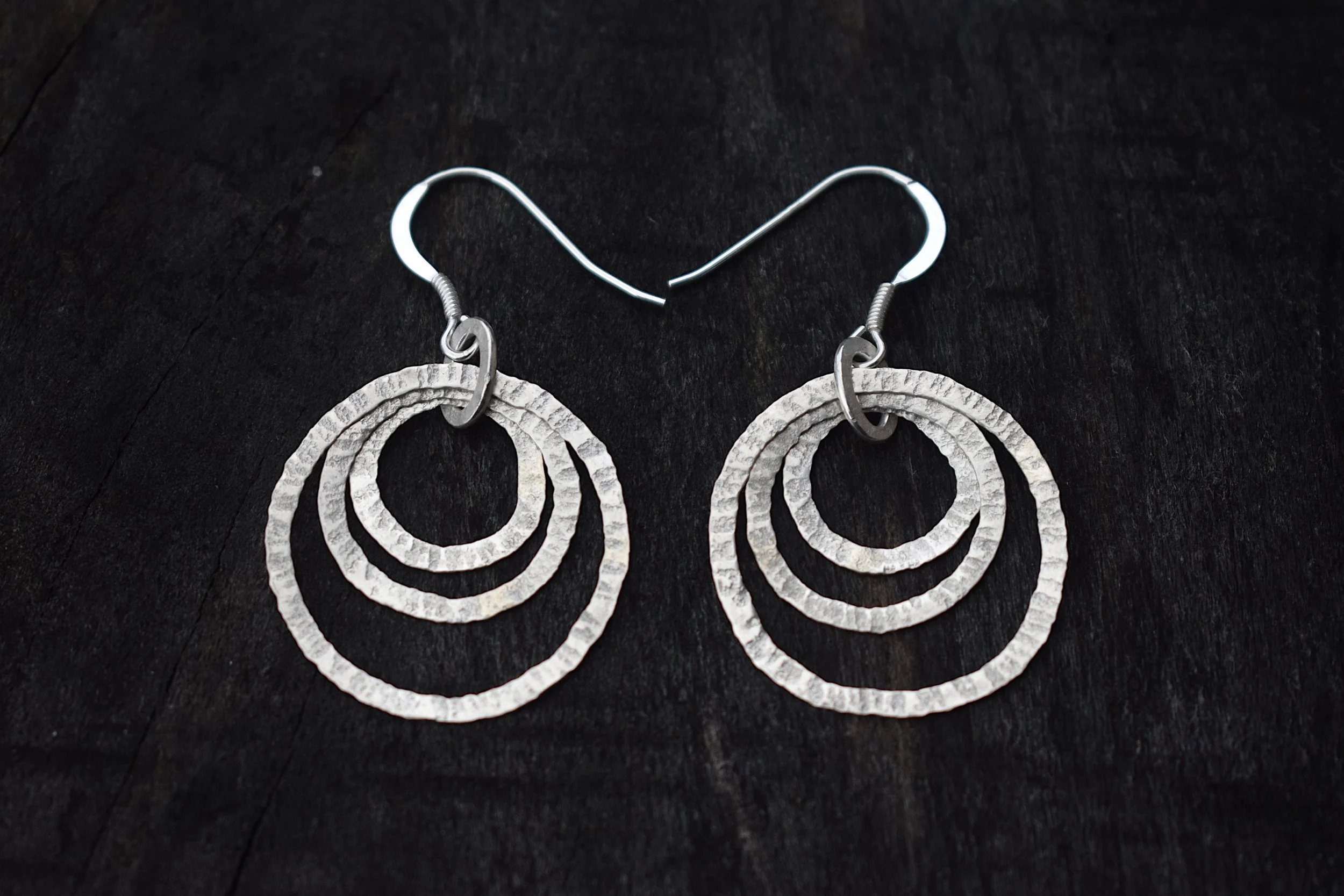
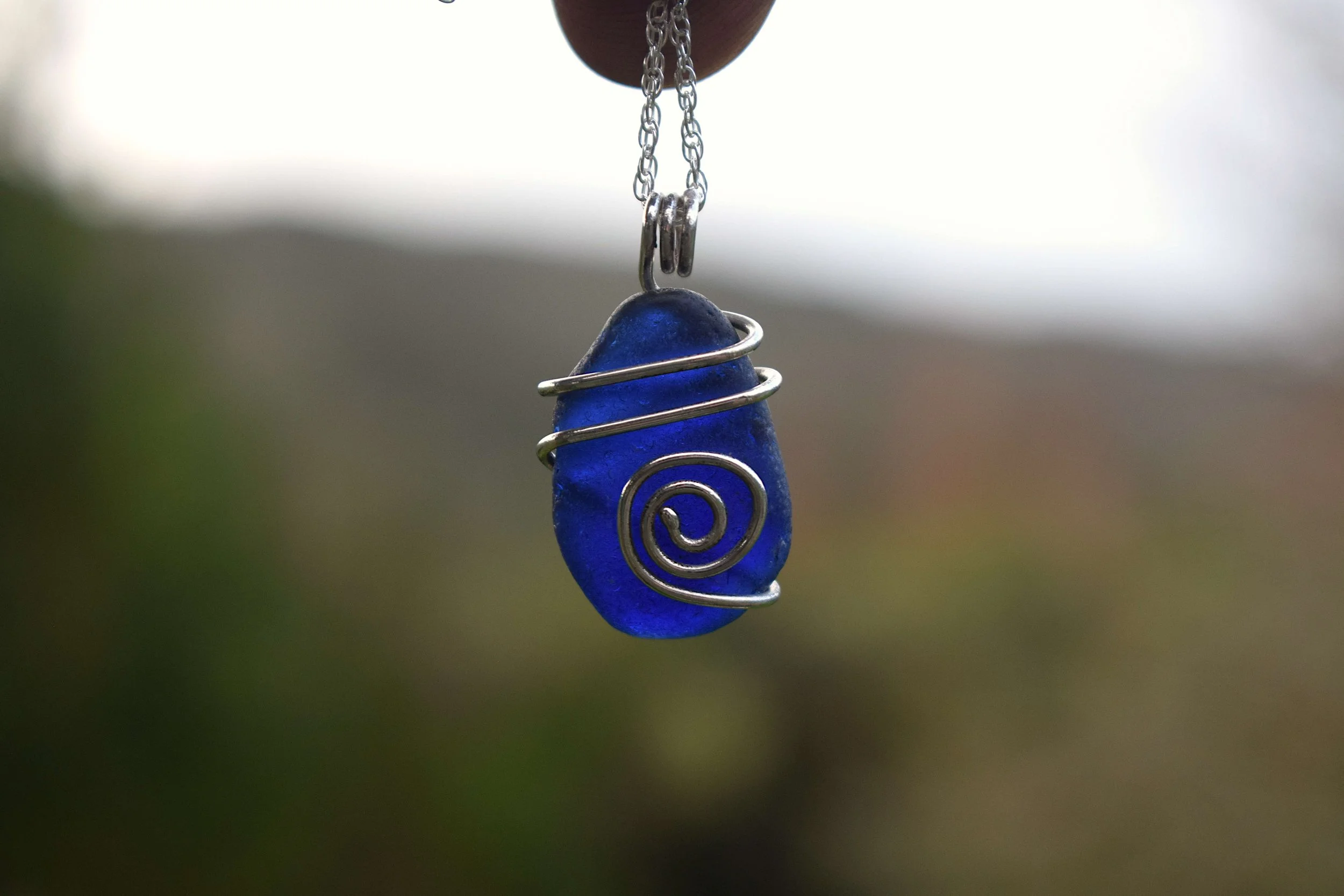
All of my jewellery range is made using ethically sourced, recycled precious metals. From sterling silver to 18k carat gold, I aim to keep my pieces affordable and unique, either inspired by the local coastline or my own blacksmithing techniques. This range includes wedding & casual rings, necklaces, earrings and bracelets. My silver and gold is sourced via cooksongold, meaning reliable quality and up to date market pricing. If you’d like a breakdown of the pricing for any of my jewellery, please ask.
I make my jewellery using traditional techniques and tools, so largely working by hand, incorporating elements of my blacksmithing work into the designs.. Much of my jewellery is decorated and shaped with hammer strikes, using varying textures to create unique work.


Carbon Steel - Knives
Choice of steel matters when it comes to a knife, depending on its purpose & size. There are so many steels to choose from, but for me, finding a few favourites and slowly branching out has worked well. Learning a steel and what you can do with it, how it performs, and how far you can push it is really important.
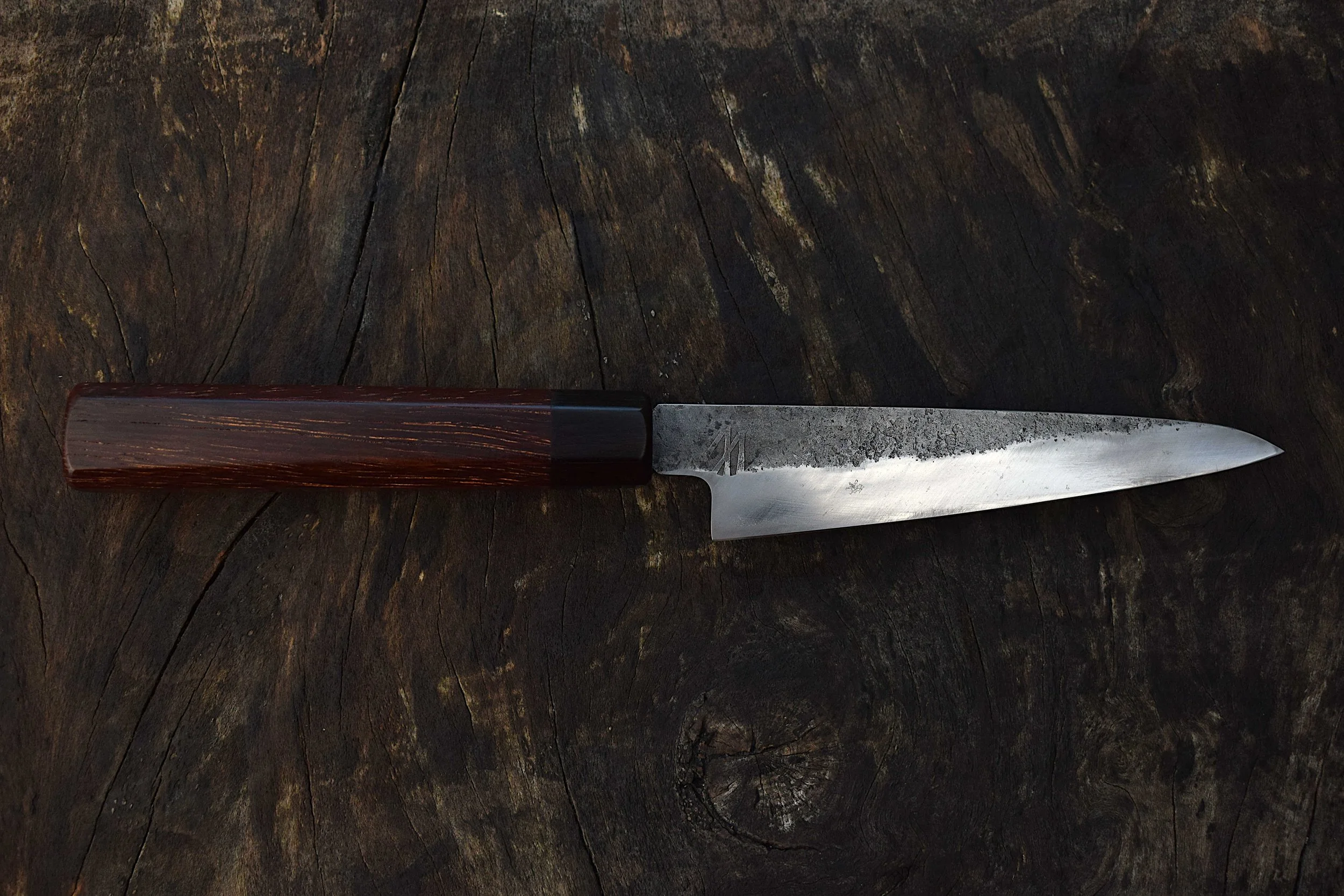
I hand forge my knives, giving them unique character and a fantastic aesthetic, and I choose the steel carefully depending on the knife I want to make. However this can be a bit daunting if you’ve never had a carbon blade before, or if you only know the most common ones.
-
Carbon steel generally refers to steel without anything added that prevents rust. But all ‘steel’ has carbon in it, otherwise it’s just ‘Iron’, its base element, which is very soft. Carbon is added in small amounts to create steel of vary grades. 0.4% creates mild steel, easy to work and good for structural work and homeware. 0.8-1.5% is a normal range for ‘high carbon’ steel blades, but as you go higher, the steel becomes brittle. 2-4% creates what we know as ‘cast iron’, (pans ect).
-
Generally speaking, carbon steel can be hardened to varying degrees, but as you go harder, you generally get more brittleness. it’s a balance between hardness and toughness, the ability to create a razor edge, and how strong that edge is.
Too much carbon in a blade designed for deboning, may result in chips and cracks as the steel is more likely to be brittle. Not enough carbon in a blade designed for clean cuts in fish, and you wont get the razor edge needed.
Too much carbon in a sword designed to crush metal armour, and it will break. -
Rust, and misuse. “Carbon steel”, generally lacks an element that helps the steel resist rust, Chromium. Stainless steel is self healing, rebuilding its top layer to resist rust. But carbon steel, to achieve higher hardness and performance, doesn’t have this. From a forging point of view, stainless is also much harder to heat treat, and requires very precise processes which aren’t easy to achieve when you work by hand.
However, if you don’t store your blade wet, and look after it, then you are rewarded with a high performing blade that will even change its colour depending on how you use it. This ‘patina’ is unique and ever changing, giving the blade some protection in the process.
-
HRC refers to hardness of steel on the Rockwell scale.
Generally, the scale goes from 56-64 for most blades. The lower the number, the less ‘hardness’ but generally, the more toughness. These blades wont take such a fine edge, but they are much more durable. Higher numbers indicate a harder steel, but with this often comes more brittleness. However you can often achieve a much, much finer edge. -
It’s important to factor in the hardness of a knife when the knife is either made for, or being used for a particular task. Boning knives want to be low, as they need to be really tough. Protein knives want to be high, as they are treated with great care and not put under stress. Everyday, workhorse knives want to sit in the middle, as they have to do a bit of everything.
-
Here are some of the most common steels I use in my blade work -
1095 - 0.9-1% carbon. A versatile steel that is really easy to work and heat treat. I generally harden this steel to around 62hrc. Which gives fantastic edge ability with a touch of durability.
52100 - A touch more carbon that 1095, and a bit of chromium too.
80crv2 - 0.8% carbon, produces slightly tougher, more wear resistant blades. Its my go to for small, flexible petty knives.
26c3 - 1.2% carbon. Very fine grain steel that produces a really fantastic edge. Not so tough though, and harder to work with.
Leather
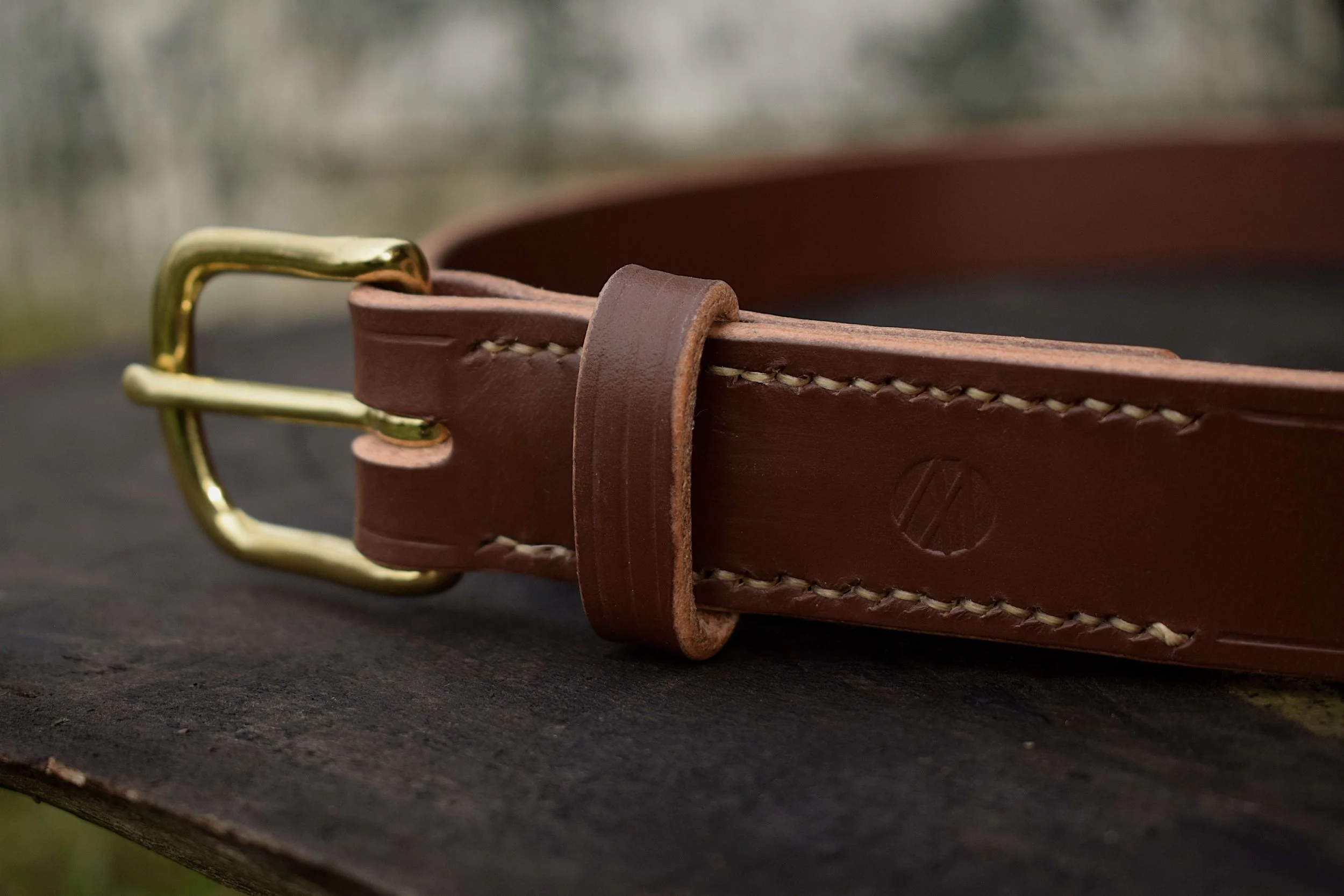
Leather is a fantastic material that is durable and a pleasure to use. Quality products will withstand a lifetime of use and can often be repaired if needed. All of my leatherwork is made using fine quality, veg tanned UK/European leather. As with much of my other work, my leather products are made entirely by hand, without any machines. This is a slower process, but it ensures real quality and care into every piece. Even every stitch is hand pulled using a traditional saddle stitch technique which ensures strength and durability and leaves small traces of handmade.
Copper, Brass & Metalwork
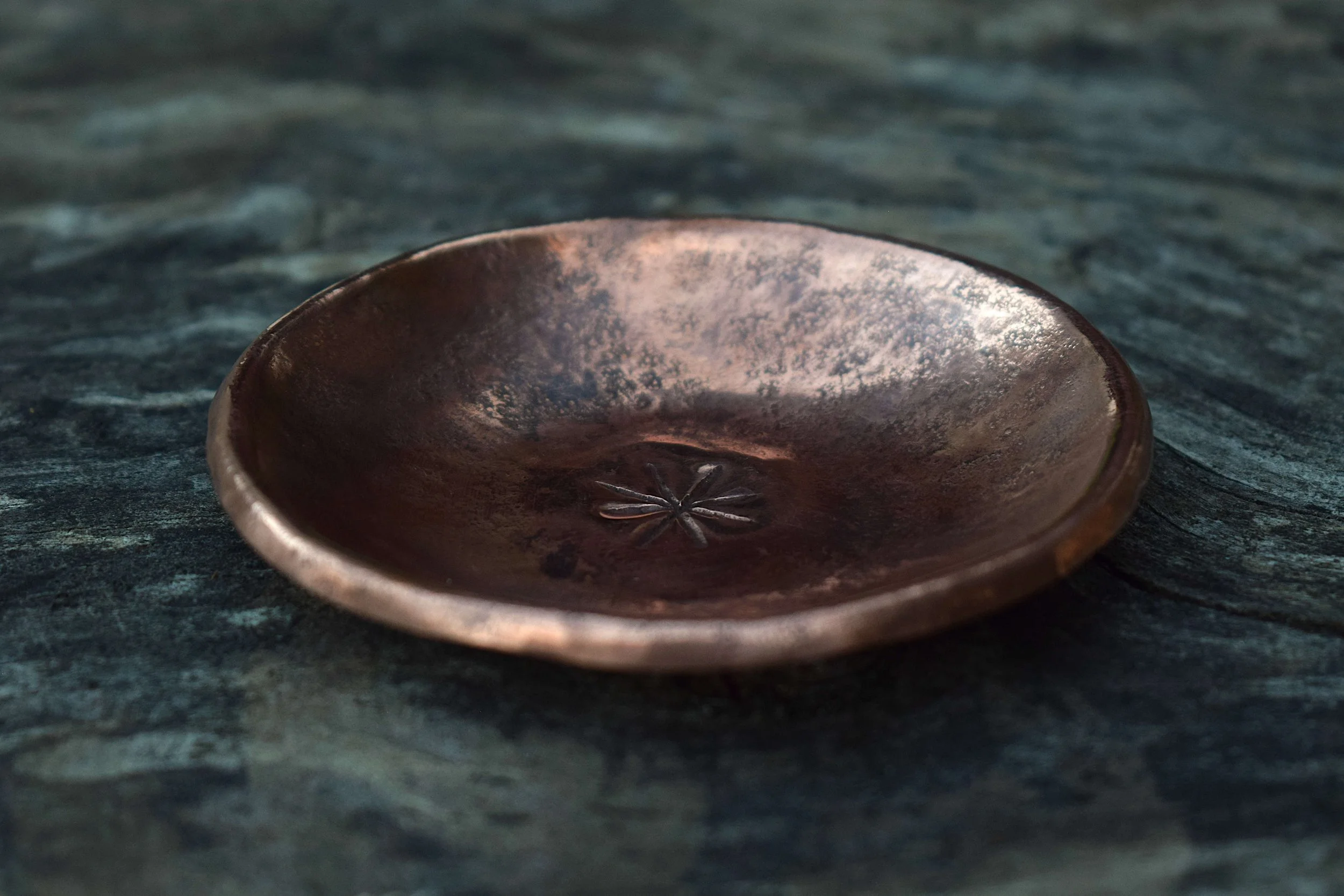
Copper and its alloys are lovely materials to work with, malleable with very fine finishes. Brass can even polish up like gold at a fraction of the price, with long lasting lustre.
The techniques used to work them are very similar to blacksmithing and jewellery, lying somewhere in-between. I mainly use brass for bracelets and bangles, and copper for homeware. Although not food safe with direct contact to acidic foods, copper is great for dry ingredients such as coffee, sugar and flour, as well as being good for decorative homeware. Below you will find a short video showing the process of hand making a copper coffee scoop.
Paper
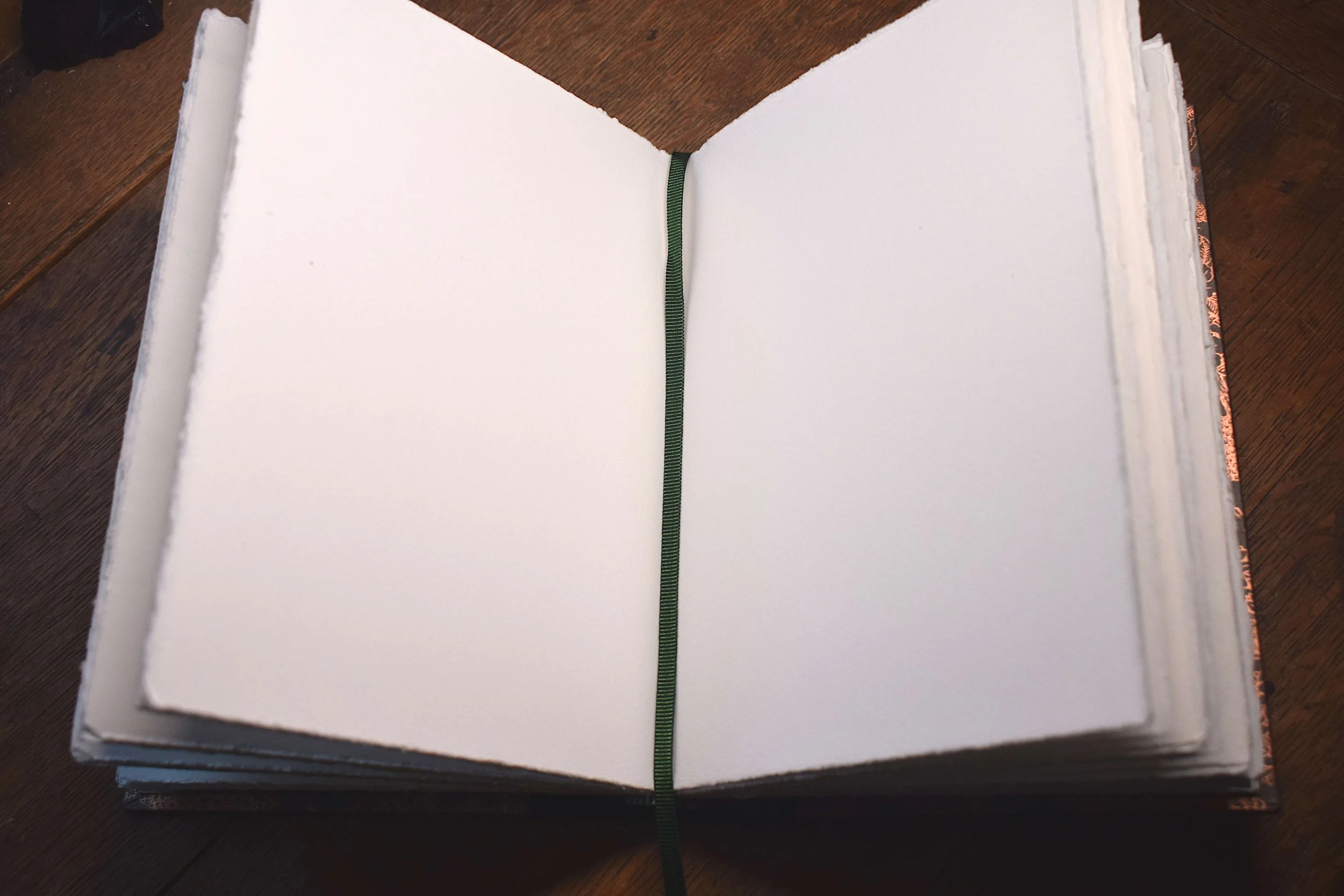
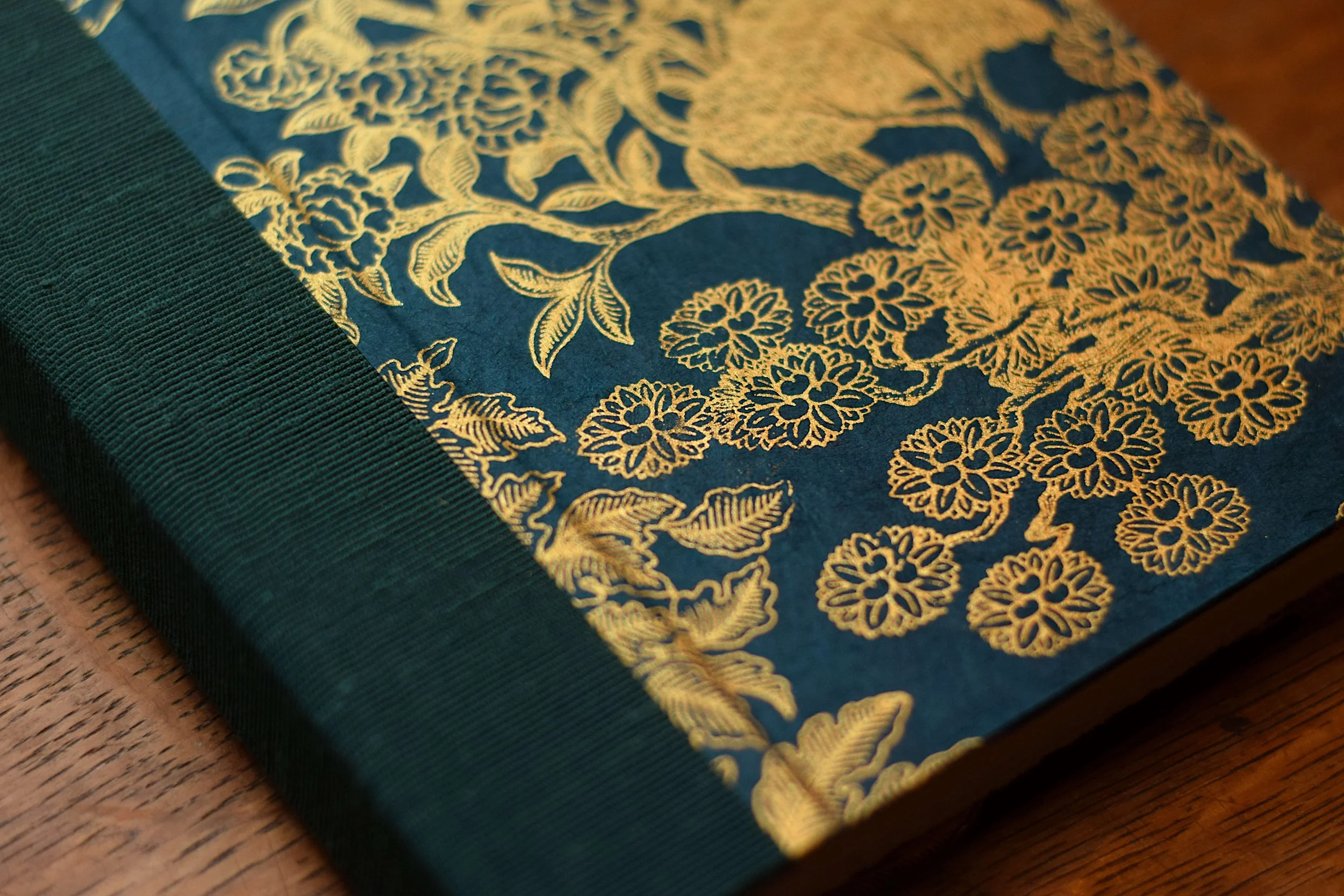
All of my sketchbooks & notebooks are hand bound, using fine quality, artist made marbled & screen printed decorative papers, sourced from Shepherds London. Made in small runs or one-off designs, they are fantastic quality and a joy to use. Filled with either cotton watercolour paper or fine grain cartridge for drawing.
Bookbinding is a slow, but enjoyable process that still uses traditional techniques. Again, these are completely hand made so some signs of this do show, but it means care and attention is put into every book.
Papers used in my books
Covers
- Screen printed Nepalese lokta paper
- Hand marbled paper sourced from Shepherds London, or Jemma Lewis
Pages
- Somerset 100% cotton printmaking paper
- Fabriano 5 NOT 300gsm, 50% cotton
- Fabriano 5 HP smooth 300gsm, 50% cotton